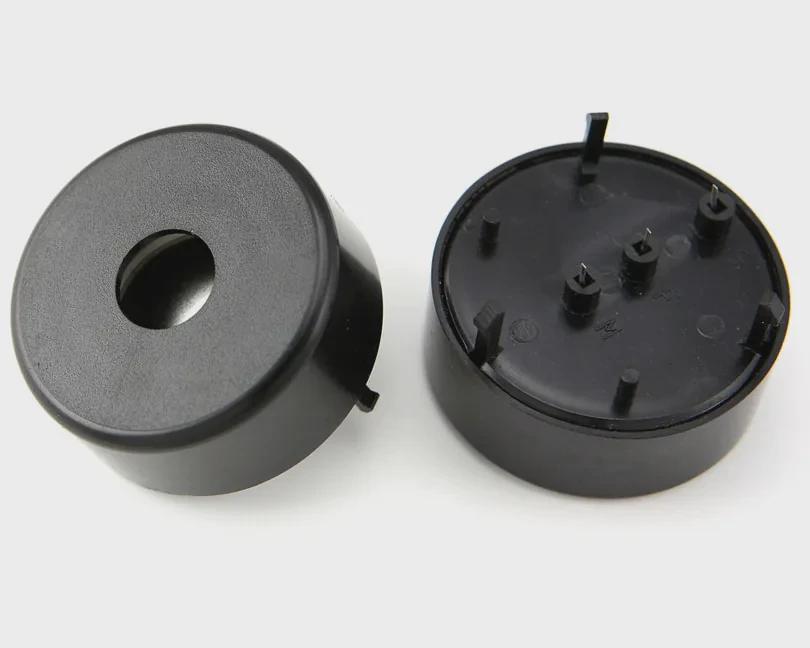
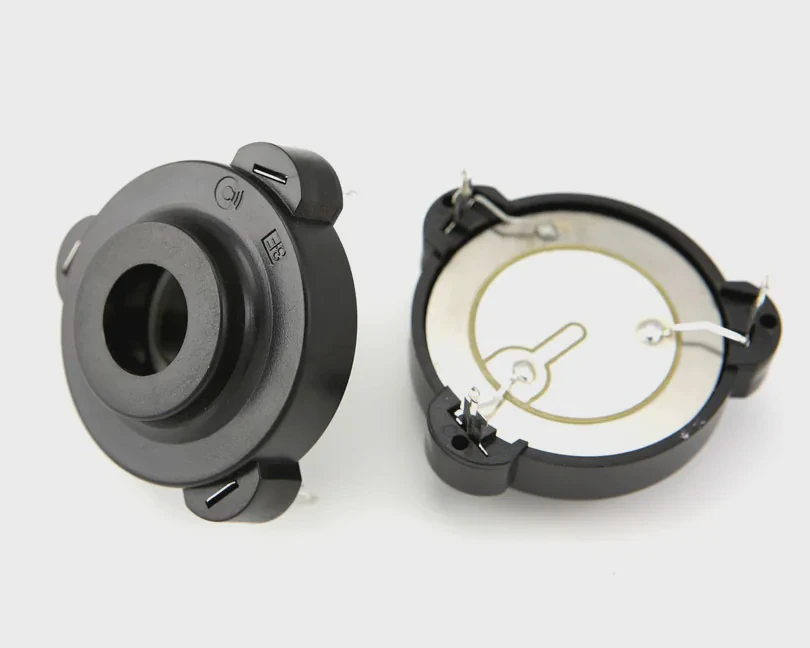
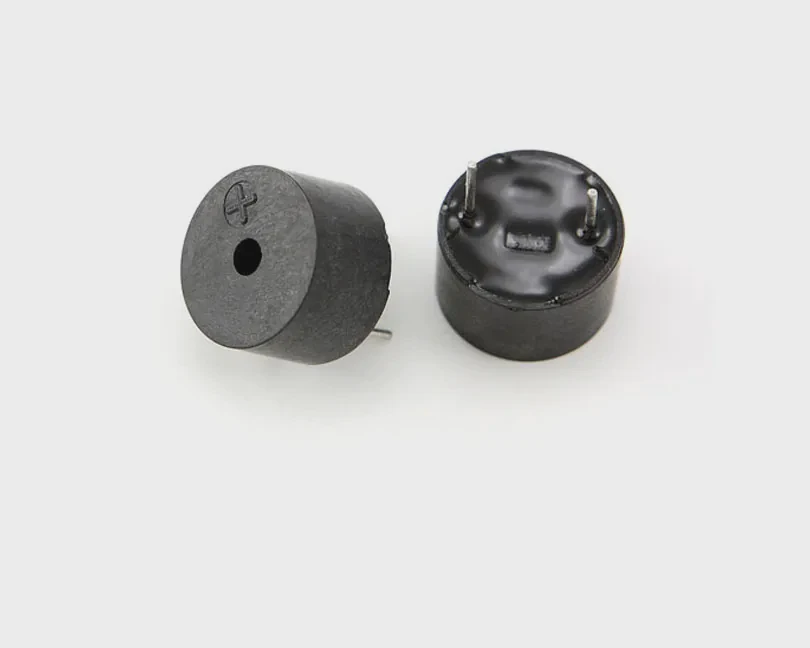
What is a piezoelectric ceramic?
- Union Team Electronics
- 25 Aug ,2026
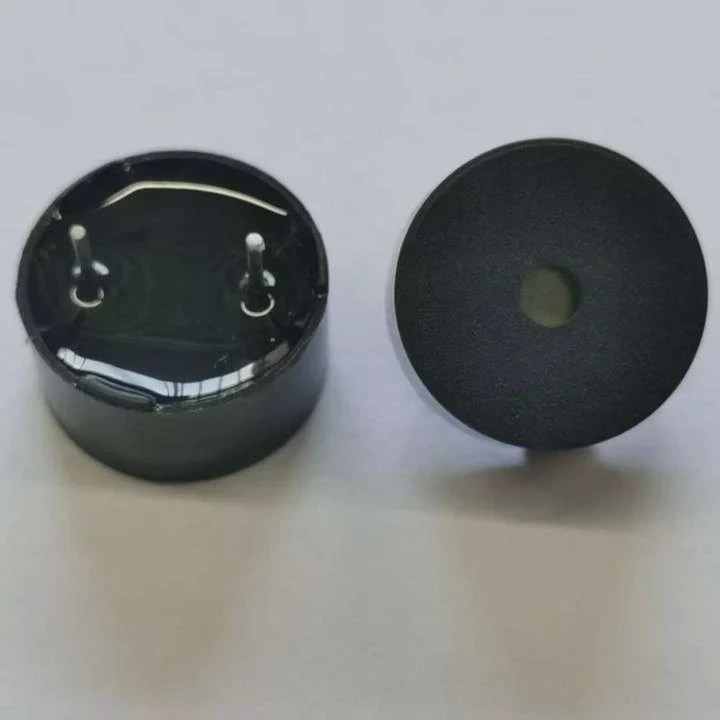
Piezoelectric ceramics look simple, but choosing or using them without understanding their electrical and mechanical behavior can cause poor sensitivity, unstable output, or unexpected product performance.
A piezoelectric ceramic is a ceramic material that converts mechanical force into electrical charge and electrical voltage into mechanical movement. This two-way conversion is called the piezoelectric effect. It allows piezoelectric ceramics to work in sensors, actuators, ultrasonic transducers, alarms, vibration devices, and many other electronic systems.
The key point is that a piezoelectric ceramic connects the electrical and mechanical parts of a system. A designer can use it to detect pressure, vibration, force, or impact. The same basic material can also create movement or vibration when voltage is applied. The final result depends on material properties, dimensions, mounting, frequency, electronics, and the working environment.
How do piezoelectric ceramics generate electrical energy?
A piezoelectric ceramic does not simply produce electricity because it is pressed. Its internal polarized structure must respond correctly to mechanical stress before a useful electrical signal appears.
Piezoelectric ceramics generate electrical energy when mechanical stress changes the position of electrical charges inside their polarized structure. This creates an electrical potential across the ceramic. Electrodes collect the charge, so pressure, vibration, impact, or other mechanical energy can become a measurable electrical signal.

The direct piezoelectric effect
The conversion from mechanical energy to electrical energy is called the direct piezoelectric effect.
Piezoelectric ceramic materials contain many electrical dipoles. Before polarization, these dipoles are not sufficiently aligned to provide the required piezoelectric response. During manufacturing, a strong electric field is applied to the ceramic under controlled conditions. This process is normally called poling or polarization.
After polarization, many dipoles remain aligned in a preferred direction. The ceramic now has a defined electrical orientation.
When pressure, vibration, bending, or another mechanical force acts on the ceramic, its crystal structure changes slightly. This movement changes the distribution of electrical charge. Positive and negative charges then appear on opposite electrode surfaces.
A connected circuit can detect this charge.
The process can be expressed in a simple form:
Mechanical force → ceramic deformation → charge displacement → electrical signal
The ceramic is therefore an energy converter. It does not create energy from nothing. Mechanical energy enters the ceramic, and part of that energy becomes electrical energy.
This distinction becomes important in sensing and energy-harvesting projects. A piezoelectric element can generate voltage from vibration, but the amount of available electrical power can still be small. A high measured voltage does not automatically mean that the element can supply high current or high power.
The inverse piezoelectric effect
Piezoelectric ceramics also work in the opposite direction.
When an electric field is applied across a polarized ceramic, its dimensions change slightly. This behavior is called the inverse piezoelectric effect.
The movement is usually very small, but it can be fast and controlled. Engineers can use a mechanical structure to turn this small dimensional change into useful displacement or vibration.
A common example is a piezoelectric ceramic disc bonded to a metal plate. When an alternating electrical signal is applied, the structure bends repeatedly. The bending creates vibration. If the frequency is within the audible range and the structure is designed correctly, it produces sound.
The two operating modes can be compared clearly:
| Piezoelectric mode | Input | Output | Typical purpose |
|---|---|---|---|
| Direct effect | Pressure or force | Electrical charge | Force sensing |
| Direct effect | Vibration | Electrical signal | Vibration monitoring |
| Direct effect | Impact | Voltage pulse | Impact detection |
| Inverse effect | Electrical voltage | Small displacement | Precision actuation |
| Inverse effect | AC or pulse signal | Vibration | Sound generation |
| Inverse effect | High-frequency signal | Ultrasonic vibration | Ultrasonic transmission |
Why the complete structure matters
The ceramic material is only one part of the energy conversion process.
Its thickness affects electrical and mechanical behavior. Its diameter or length affects resonance. The electrode area influences capacitance. The mounting method changes how mechanical stress reaches the ceramic.
A ceramic disc bonded to a metal plate will behave differently from the same ceramic used alone. A rigid mounting structure may restrict movement. A soft adhesive may reduce mechanical stress, but it can also change frequency response.
The electronics matter as well.
When the ceramic works as a sensor, the input impedance, protection circuit, amplifier, filter, and signal-processing method can change the measured result. When it works as an actuator, drive voltage, waveform, frequency, and circuit output capability influence the mechanical response.
This is why practical piezoelectric design should consider the ceramic, mechanical structure, and electronic circuit as one system.
Which properties determine piezoelectric ceramic performance?
Two piezoelectric ceramics with similar dimensions can behave very differently. Selecting a part only by size or price can result in weak output, wrong resonance, excessive loss, or poor stability.
Piezoelectric ceramic performance depends on piezoelectric coefficients, electromechanical coupling, dielectric properties, mechanical quality factor, capacitance, resonance frequency, temperature characteristics, dimensions, and mechanical design. The most important properties change according to whether the ceramic is used for sensing, actuation, sound generation, vibration, or ultrasonic energy conversion.
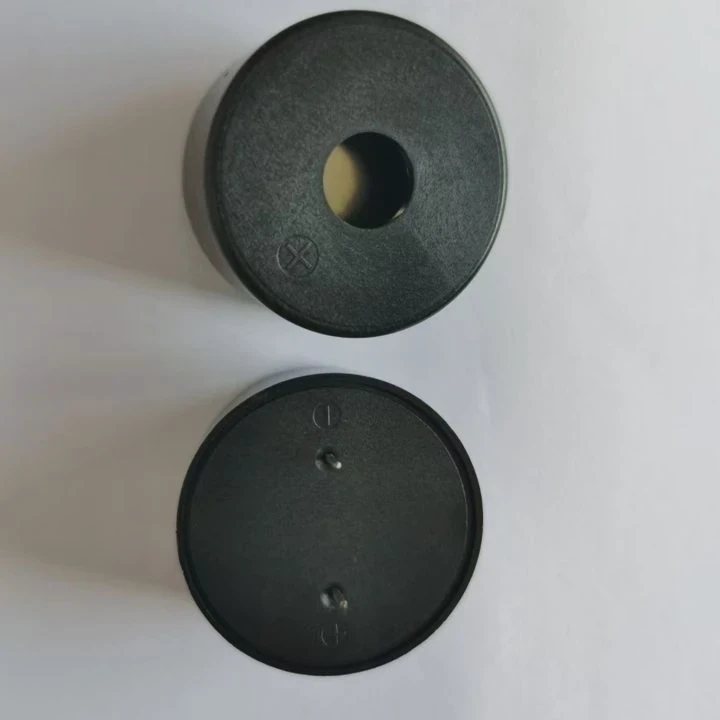
Piezoelectric coefficients
Piezoelectric coefficients describe the relationship between mechanical and electrical behavior.
For a sensor, these coefficients help indicate how much electrical response can result from mechanical stress. For an actuator, they help describe how the material changes dimensions when an electric field is applied.
A larger coefficient can be useful, but the highest value is not automatically the best choice.
A vibration sensor may need high sensitivity and stable frequency response. An ultrasonic transducer may place more importance on electromechanical conversion and resonance behavior. A piezoelectric sound element may require a balance between displacement, capacitance, resonant frequency, and drive voltage.
The direction of the force also matters. Piezoelectric ceramics have directional properties because they are polarized. The relationship between the polarization direction and the mechanical force must match the intended operating mode.
Electromechanical coupling
The electromechanical coupling factor describes how effectively electrical and mechanical energy interact inside the material.
This property is important in transducers where energy conversion efficiency matters. Ultrasonic devices are a good example. The ceramic must convert electrical excitation into mechanical vibration during transmission. It may then need to convert returning mechanical vibration into an electrical signal during reception.
The required coupling behavior depends on the vibration mode and ceramic geometry.
Resonance frequency
Piezoelectric components often operate near a mechanical resonance.
At or near resonance, a relatively small electrical input can produce strong mechanical vibration. The same effect can increase sensor response at certain frequencies.
This can be useful, but it can also create problems.
A sensor designed for broad vibration measurement should not accidentally amplify one narrow frequency so strongly that the signal becomes misleading. A sound-generating element may intentionally use resonance because higher vibration can help increase sound output.
Ceramic dimensions strongly affect resonance, but they are not the only factor.
The metal diaphragm, adhesive, enclosure, mounting method, mechanical load, and surrounding medium can all change the resonant frequency of a finished component.
Electrical and environmental properties
A design engineer should normally evaluate several properties together instead of focusing on a single number.
| Property | Why it matters | Typical design question |
|---|---|---|
| Piezoelectric coefficient | Affects sensing or movement response | How much output is required? |
| Coupling factor | Influences energy conversion | How efficiently must energy be converted? |
| Capacitance | Affects the electrical load | Can the circuit drive the element correctly? |
| Resonance frequency | Affects vibration response | What frequency range is required? |
| Mechanical quality factor | Influences resonance behavior | Is a sharp or controlled resonance needed? |
| Dielectric loss | Influences electrical loss | Will heat or efficiency become a problem? |
| Temperature characteristics | Affect stability and life | What temperatures will the product experience? |
| Dimensions | Affect frequency and structure | How much installation space is available? |
Temperature deserves special attention.
Piezoelectric ceramics have temperature limits. Excessive heat can reduce their polarized state. If the material approaches or exceeds critical temperature conditions, its piezoelectric performance may fall significantly.
Humidity, thermal cycling, mechanical shock, and long-term stress can also influence the finished assembly.
The application should therefore define the material requirements.
A sensor used inside normal consumer electronics has different requirements from an element mounted near an industrial motor. An ultrasonic transducer operating in liquid also has different requirements from a ceramic disc used inside an audible alarm.
The best ceramic is not simply the one with the highest specification. The best choice is the material and structure that can provide stable performance under the real electrical, mechanical, and environmental conditions of the product.
Why are piezoelectric ceramics used in industrial applications?
Industrial equipment often needs to detect very small mechanical changes or create controlled movement. Conventional mechanical systems can add moving parts, size, wear, and maintenance requirements.
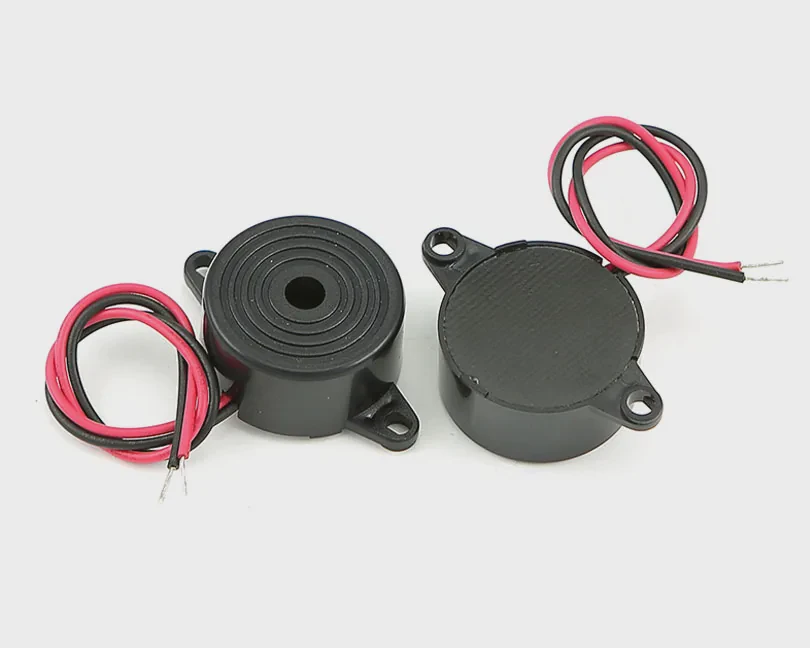
Piezoelectric ceramics are used in industrial applications because they provide fast response, compact size, high sensitivity, precise movement, and direct electrical-to-mechanical conversion. They can detect vibration, impact, pressure, and dynamic force or generate vibration, sound, ultrasonic energy, and small controlled movements for industrial monitoring and automation systems.
Compact sensing for industrial equipment
Piezoelectric ceramics can detect mechanical events with a relatively simple physical structure.
This is useful when a machine produces vibration, impact, or rapidly changing force. The ceramic converts that mechanical input into an electrical signal. The signal can then enter an amplifier, monitoring circuit, microcontroller, or industrial control system.
Vibration monitoring is a common example.
Motors, pumps, fans, compressors, bearings, and other moving systems produce characteristic vibration during operation. Mechanical problems can change this vibration.
A piezoelectric sensor can help detect these changes.
The sensor does not automatically identify the fault. It provides a signal that represents mechanical activity. The control system or monitoring software must then process that signal.
Mounting is important here.
If the element has poor mechanical contact with the machine, some vibration may never reach the ceramic. If the mounting structure has its own strong resonance, the measured signal may include effects created by the mounting system.
The mechanical design is therefore part of sensor accuracy.
Dynamic measurement is an important strength
Piezoelectric sensing is especially useful for dynamic events.
Impact, vibration, rapidly changing pressure, and changing force create strong responses because they continuously change the mechanical stress applied to the ceramic.
Static measurement is different.
A piezoelectric ceramic can generate charge when a constant force is first applied. But this charge can gradually leak through the material and electronic circuit. As a result, standard piezoelectric sensing is often better for changing forces than for measuring a constant force over a very long period.
This distinction can prevent a common design mistake.
If an industrial project needs to detect a machine impact, piezoelectric sensing may be an excellent option. If the same project needs to measure a constant load for hours, another sensing method or a specially designed measurement system may be more suitable.
Fast actuation
The inverse piezoelectric effect provides another useful industrial function.
A ceramic responds quickly when an electric field is applied. This allows an actuator to create small movements without conventional motors, gears, or similar mechanical drive systems.
The movement may be small, but precision can be high.
This makes piezoelectric actuation useful in applications that value fine adjustment, rapid response, or repeated micro-movement.
Examples include precision positioning, optical adjustment, micro-dispensing, vibration control, and specialized automation equipment.
Reliability still depends on mechanical protection
Piezoelectric ceramics can provide long operating life, but ceramic materials are brittle.
A design should avoid excessive bending, uneven clamping, uncontrolled impact, and high mechanical stress. Electrical connections also need suitable protection.
The trade-off is often between mechanical protection and performance.
A thick protective structure can reduce the stress reaching a sensing ceramic. A very rigid mounting method can change resonance. A flexible adhesive can protect the element but may reduce mechanical energy transfer.
The final design should balance these effects.
Testing should reproduce actual working conditions whenever possible. Temperature, humidity, vibration level, mechanical load, mounting method, drive voltage, and operating frequency should be included when they are relevant.
This system-level testing is often more useful than evaluating a free ceramic element on a laboratory table.
Where can piezoelectric ceramics improve sensing and actuation?
Piezoelectric ceramics can serve many functions, but placing one into an existing design does not automatically improve it. The best applications make use of their fast response, compact structure, and two-way conversion.
Piezoelectric ceramics can improve vibration monitoring, impact detection, pressure sensing, ultrasonic systems, precision positioning, acoustic alerts, haptic feedback, industrial automation, and smart equipment. They are especially useful when an application needs fast response, compact dimensions, high sensitivity, high-frequency operation, or small and precise mechanical movement.

Vibration monitoring
Vibration is one of the most natural inputs for a piezoelectric sensor.
A rotating machine creates mechanical vibration continuously. A properly mounted piezoelectric element converts part of this vibration into an electrical signal.
The system can monitor changes in amplitude, frequency, or vibration patterns.
This approach can support condition monitoring. A change in vibration may indicate imbalance, looseness, wear, impact, or another mechanical change.
The sensor location has a major influence on signal quality.
A ceramic placed close to the vibration source may receive a stronger signal. A ceramic installed behind several mechanical joints may receive a weaker or modified signal. Housing resonance can also affect the measurement.
A good design therefore evaluates both the ceramic and the mechanical path between the machine and sensor.
Impact and dynamic force detection
Piezoelectric ceramics respond quickly to impact.
When an object strikes a structure, the force creates mechanical stress and vibration. A piezoelectric element can turn this event into a voltage pulse.
This can be useful for impact detection, touch interfaces, equipment protection, counting systems, and event detection.
The electronics need suitable protection because a sharp mechanical impact can sometimes create a relatively high voltage even though the available electrical energy is small.
Input protection, signal conditioning, filtering, and threshold settings should match the expected signal.
Mechanical placement matters as well. A sensor should receive enough energy to detect the event without being exposed to stress that could crack the ceramic.
Ultrasonic systems
Ultrasonic applications use both sides of the piezoelectric effect.
During transmission, an electrical signal drives the ceramic. The ceramic vibrates at high frequency and creates ultrasonic waves.
During reception, returning ultrasonic waves apply mechanical stress to the ceramic. The ceramic then generates an electrical signal.
This two-way operation makes piezoelectric ceramics useful in distance sensing, object detection, liquid level measurement, flow-related systems, ultrasonic cleaning, and other ultrasonic equipment.
Frequency selection is critical.
The dimensions and material properties of the ceramic affect its natural vibration modes. The complete transducer structure must also support the required operating frequency.
Acoustic coupling becomes important because the ultrasonic energy must travel from the ceramic into air, liquid, or another material.
A strong ceramic cannot compensate for a poorly designed acoustic path.
Precision actuation
Piezoelectric ceramics can also improve systems that require tiny and fast mechanical movement.
A voltage changes the dimensions of the ceramic. The dimensional change is small, but a mechanical structure can sometimes increase the useful movement.
This principle is useful in precision positioning, optical control, micro-pumps, micro-dosing systems, vibration control, and specialized automation.
Several limits should be considered.
The available displacement is usually much smaller than the travel produced by a conventional motor. Some actuator designs also require high voltage. Hysteresis, temperature, mechanical preload, and electrical drive conditions can affect positioning accuracy.
A closed-loop control system may be useful when very precise positioning is required.
The required movement, force, speed, voltage, and accuracy should therefore be defined before selecting the ceramic.
Sound and acoustic alerts
Piezoelectric ceramics can produce audible sound when they are combined with a suitable mechanical structure.
A common structure uses a ceramic disc attached to a metal diaphragm. An alternating voltage causes repeated bending. This movement pushes the surrounding air and creates sound.
The ceramic is only one factor that determines the final sound pressure level.
The diaphragm diameter, cavity, resonant frequency, mounting structure, drive voltage, waveform, and enclosure can all change acoustic output.
This explains why an element may sound loud during a simple bench test but become much quieter after installation inside a product.
An enclosure can block airflow or shift resonance. A different mounting method can reduce diaphragm movement. Even the location of a sound outlet can influence the measured result.
Selecting a piezoelectric ceramic as part of a system
A practical selection process should start with the required function.
For sensing, the project should define the mechanical input, expected frequency range, minimum useful signal, environmental conditions, installation space, and electronic interface.
For actuation, the project should define movement, force, frequency, voltage, mechanical load, operating life, and environmental limits.
For acoustic applications, frequency and sound output become major factors. For ultrasonic systems, resonance, coupling, geometry, and conversion efficiency become more important.
Prototype testing should use a structure that is close to the final product.
A free ceramic element on a test bench cannot fully represent its behavior after bonding, clamping, wiring, housing, or loading. The finished structure may change resonance and sensitivity significantly.
This is also why custom dimensions can sometimes solve problems that cannot be fixed by changing the electronic circuit alone.
A different ceramic diameter can change resonance. A different thickness can change electrical and mechanical characteristics. A different electrode arrangement can support another connection method. A different ceramic formulation can change sensitivity, coupling, or temperature behavior.
Piezoelectric ceramic design therefore sits between material science, mechanical engineering, and electronics.
When these three areas are considered together, the component can provide stable sensing or actuation without unnecessary mechanical complexity. When they are considered separately, a ceramic with good datasheet values can still perform poorly in the finished product.
Conclusion
Piezoelectric ceramics convert mechanical and electrical energy in both directions. Their fast response, sensitivity, compact size, and precise movement support sensing, actuation, sound, vibration, and ultrasonic applications. Reliable performance depends on matching the ceramic material, dimensions, mechanical structure, electronics, and operating environment to the real application.
- Pre What Is Self-drive Piezo Buzzer?
- Next: Sorry!